I want driving policies that are learned in simulation to hold up on a real vehicle. My work covers the three pieces that takes: getting policies onto the road, teaching them what is unsafe, and building a simulator that includes people. Most recent first.
- 2026
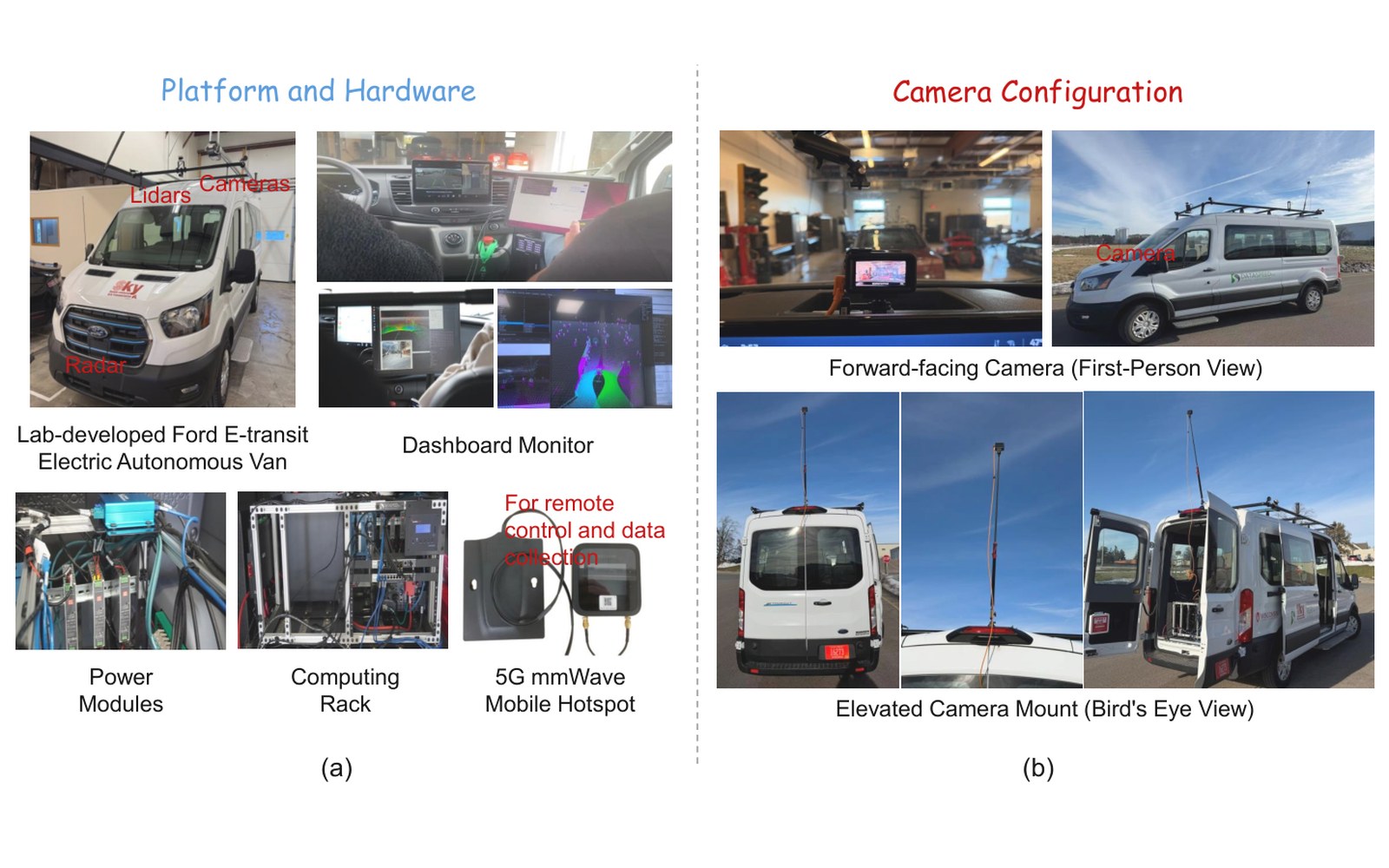
Run policies on a real vehicle
Sim-to-real driving
Sim2Real-AD runs CARLA-trained, VLM-guided reinforcement-learning policies on a full-scale van, with no real-world RL training data.
- 2026
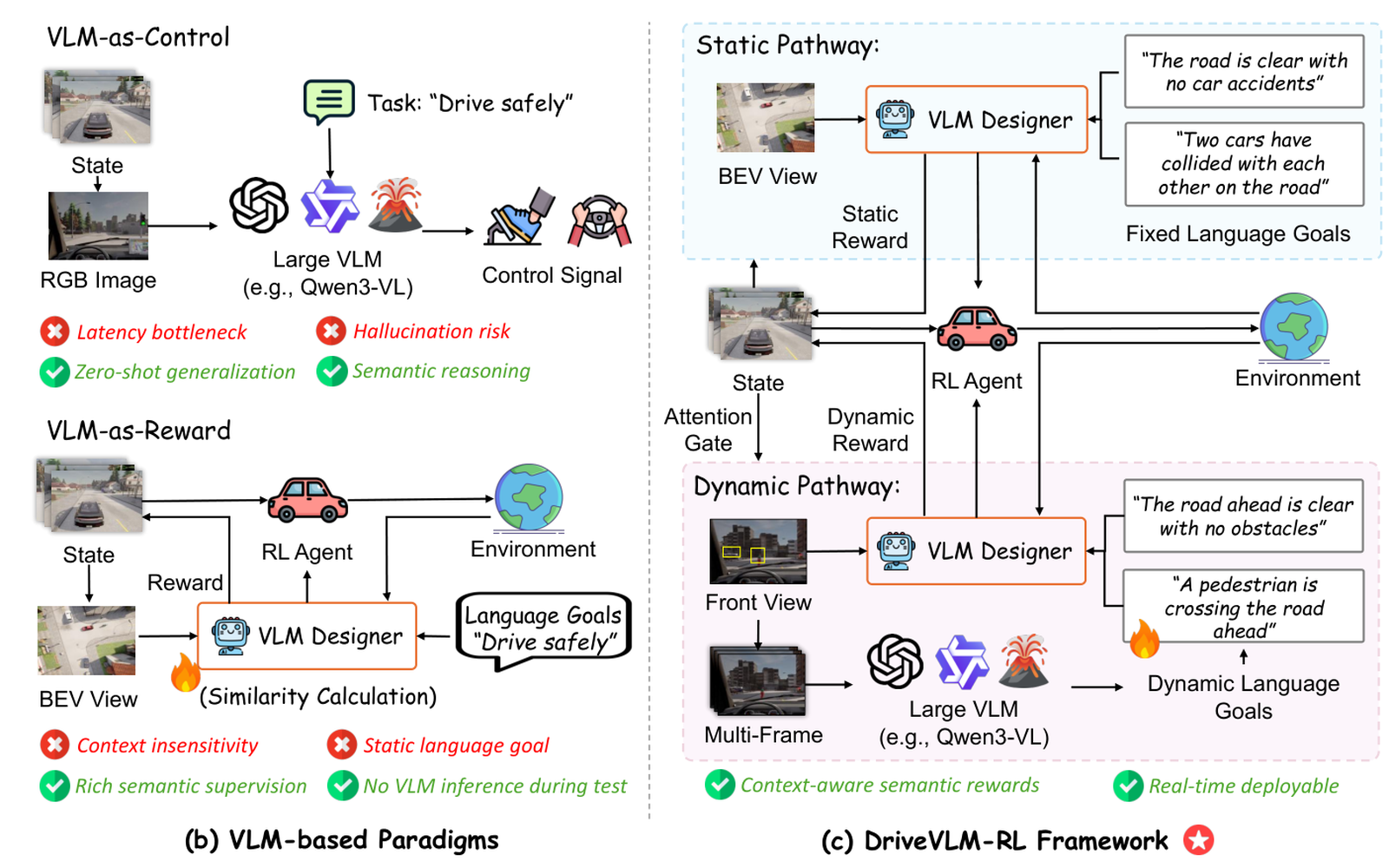
Teach policies what is unsafe
VLMs and world models
Vision-language models give the driving agent semantic safety rewards during training and are removed at deployment. I also study how world models and end-to-end policies fail in rare, dangerous scenes.
- 2025
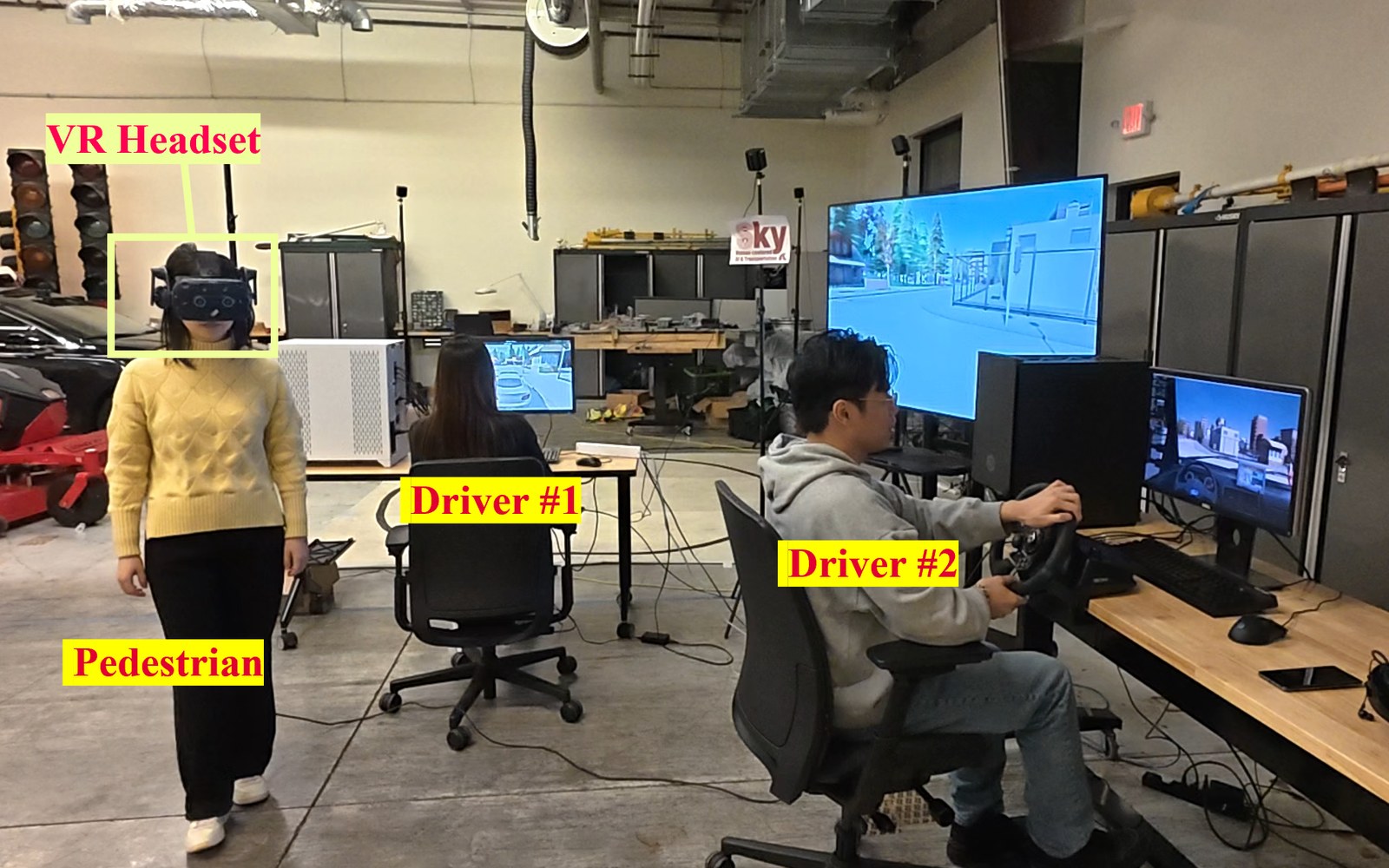
Simulate with people in the loop
Human-AI interaction
Sky-Drive is Sky-Lab's open-source multi-agent simulator, where human drivers, pedestrians and AI agents share one digital twin. We use it to study how autonomous vehicles interact with vulnerable road users.
- 2018–2025
Before that
I did my B.E. and M.S. at Tongji University, where I built a driving simulation platform for the Virtual Track Train and studied its tire wear. That work is what sparked my interest in the research I do now. I'm grateful to my advisor Prof. Hechao Zhou and to my labmates Juyao Wei and Mingsu Mei for their help along the way.


